Three small DNS records decide whether the world trusts email from your domain. Here is what they do — in business language.
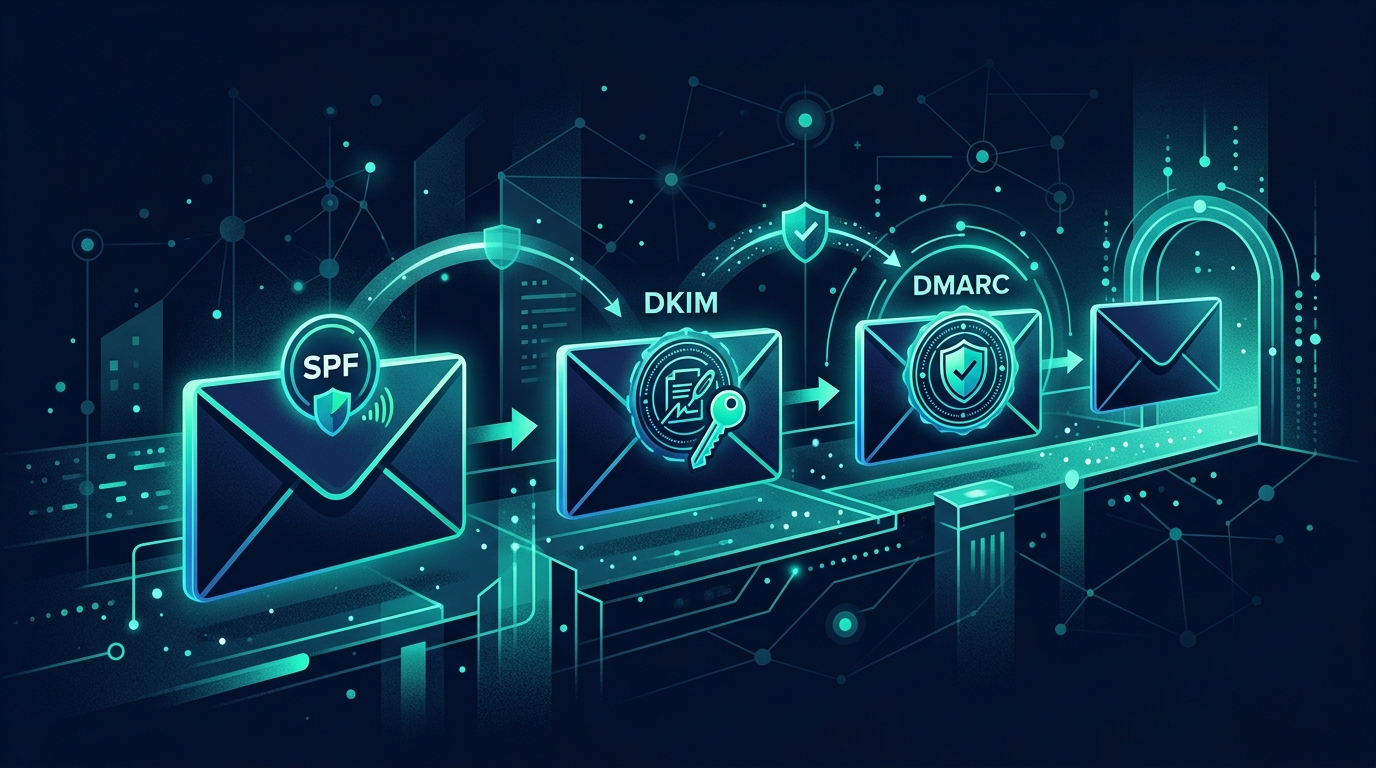
Email was designed in an era when nobody lied about who they were. SPF, DKIM and DMARC are the layers added to fix that. Get them right and attackers can't convincingly spoof your domain — and your legitimate email lands in the inbox, not the junk folder.
SPF is a list, published in DNS, of the servers allowed to send mail for your domain. If a message arrives from a server not on the list, receivers can mark or reject it.
DKIM cryptographically signs every outbound message. The receiver looks up your public key in DNS and verifies the signature.
DMARC ties SPF and DKIM together. It tells receivers what to do if either check fails — do nothing, quarantine, or reject — and reports back to you on what's happening.
Most businesses publish a permissive DMARC record and never reach enforcement. We move clients through a structured path:
Local SMEs are routinely impersonated for invoice fraud and CEO impersonation. Enforced DMARC removes the easiest version of that attack and protects your brand and your customers in one move.
Our cybersecurity team handles SPF, DKIM and DMARC end-to-end, including continuous monitoring and enforcement for higher-volume domains.
Tell us what you're building. We'll bring the strategy, the platforms and the people to make it happen.